

NEWS
Understanding Dry Granulator Machines: Key Features and Benefits
Jan 31,2026
---
Dry granulator machines play a crucial role in various industrial sectors, particularly in pharmaceuticals, food processing, and chemical manufacturing. These machines are designed to transform fine powders into granules through a dry process, eliminating the need for moisture during production. This article delves into the fundamental features and benefits of dry granulator machines, providing you with practical knowledge to better understand their applications.
One of the primary advantages of dry granulation is its efficiency in producing uniform granules without the use of binders or solvents, which can complicate the manufacturing process. Dry granulator machines utilize a pressure-driven process to compact powder into sheets or ribbons, which are then broken down into granules of desired sizes. This method not only reduces the risk of contamination but also minimizes drying time, resulting in quicker production cycles.
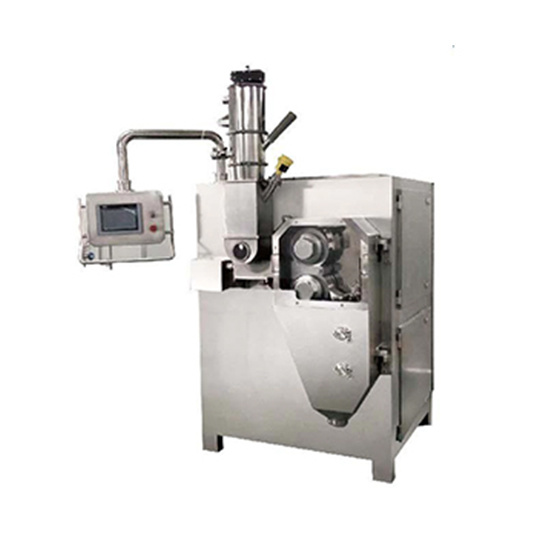
The design of dry granulator machines often includes components such as rollers, cutting blades, and a feed system. The rollers apply significant pressure to the powder, forcing the particles to agglomerate. Depending on the machine model, these rollers can be adjustable, allowing for various granule sizes and densities. Additionally, built-in cutting mechanisms ensure that the granules produced meet specific dimensional requirements, enhancing the consistency of the final product.
Another critical benefit of dry granulator machines is their versatility. They can be used with a wide range of materials, including delicate powders that may be sensitive to moisture or heat. This makes them ideal for producing granules from active pharmaceutical ingredients (APIs), excipients, or even certain food ingredients, expanding their utility across different industries. Furthermore, their compact design often means they require less floor space compared to traditional granulation equipment.
Maintenance is a key factor to consider with dry granulator machines. Regular cleaning and inspection of the rollers and cutting components are necessary to maintain optimal performance and prevent cross-contamination. Many modern machines are designed with easy-to-clean features, ensuring that maintenance does not impede production schedules.
Finally, investing in a dry granulator machine can lead to significant cost savings. By reducing the need for additional drying equipment, minimizing material loss, and improving production efficiency, manufacturers can enhance their overall profitability. Additionally, the consistent quality of granules produced can lead to better product performance, further contributing to business success.
In summary, dry granulator machines are a vital component in the production line of many industries. Their ability to produce high-quality, uniform granules without moisture makes them an efficient choice for various applications. Understanding the key features and benefits of these machines can help businesses optimize their manufacturing processes and achieve improved results.
Dry granulator machines play a crucial role in various industrial sectors, particularly in pharmaceuticals, food processing, and chemical manufacturing. These machines are designed to transform fine powders into granules through a dry process, eliminating the need for moisture during production. This article delves into the fundamental features and benefits of dry granulator machines, providing you with practical knowledge to better understand their applications.
One of the primary advantages of dry granulation is its efficiency in producing uniform granules without the use of binders or solvents, which can complicate the manufacturing process. Dry granulator machines utilize a pressure-driven process to compact powder into sheets or ribbons, which are then broken down into granules of desired sizes. This method not only reduces the risk of contamination but also minimizes drying time, resulting in quicker production cycles.
The design of dry granulator machines often includes components such as rollers, cutting blades, and a feed system. The rollers apply significant pressure to the powder, forcing the particles to agglomerate. Depending on the machine model, these rollers can be adjustable, allowing for various granule sizes and densities. Additionally, built-in cutting mechanisms ensure that the granules produced meet specific dimensional requirements, enhancing the consistency of the final product.
Another critical benefit of dry granulator machines is their versatility. They can be used with a wide range of materials, including delicate powders that may be sensitive to moisture or heat. This makes them ideal for producing granules from active pharmaceutical ingredients (APIs), excipients, or even certain food ingredients, expanding their utility across different industries. Furthermore, their compact design often means they require less floor space compared to traditional granulation equipment.
Maintenance is a key factor to consider with dry granulator machines. Regular cleaning and inspection of the rollers and cutting components are necessary to maintain optimal performance and prevent cross-contamination. Many modern machines are designed with easy-to-clean features, ensuring that maintenance does not impede production schedules.
Finally, investing in a dry granulator machine can lead to significant cost savings. By reducing the need for additional drying equipment, minimizing material loss, and improving production efficiency, manufacturers can enhance their overall profitability. Additionally, the consistent quality of granules produced can lead to better product performance, further contributing to business success.
In summary, dry granulator machines are a vital component in the production line of many industries. Their ability to produce high-quality, uniform granules without moisture makes them an efficient choice for various applications. Understanding the key features and benefits of these machines can help businesses optimize their manufacturing processes and achieve improved results.
More News
Get a Quote

Add:
No. 9, Yungu Road, Zhutang Town, Jiangyin City, Jiangsu Province, China
E-mail: pxjx@jypxjx.com
Copyright © 2022 Jiangyin Peixin Machinery Technology Co., Ltd.


