

NEWS
Understanding the Mechanics: The Essential Role of Dry Granulator Machines in Modern Industry
Feb 26,2026
Understanding the Mechanics: The Essential Role of Dry Granulator Machines in Modern Industry
Table of Contents
- 1. Introduction to Dry Granulation
- 2. What is Dry Granulation?
- 3. The Working Principle of Dry Granulator Machines
- 4. Benefits of Using Dry Granulator Machines
- 5. Applications of Dry Granulator Machines in Various Industries
- 6. How to Choose the Right Dry Granulator for Your Needs
- 7. Maintenance and Troubleshooting of Dry Granulator Machines
- 8. The Future of Dry Granulation Technology
- 9. FAQs About Dry Granulator Machines
- 10. Conclusion
1. Introduction to Dry Granulation
Dry granulation is a critical process in the manufacturing sector, particularly for pharmaceutical, food, and chemical industries. It involves the compaction of powders into granules without the need for water or solvents. This method is favored for its ability to produce granules with specific size, shape, and density, which are essential for ensuring uniformity and quality in the final product.
2. What is Dry Granulation?
Dry granulation is defined as a technique used to convert fine powders into larger, more manageable granules. Unlike wet granulation, which uses liquid binders to form granules, dry granulation relies on mechanical pressure to compact the powders. This process not only enhances the flowability of the materials but also improves the compressibility and overall product performance.
3. The Working Principle of Dry Granulator Machines
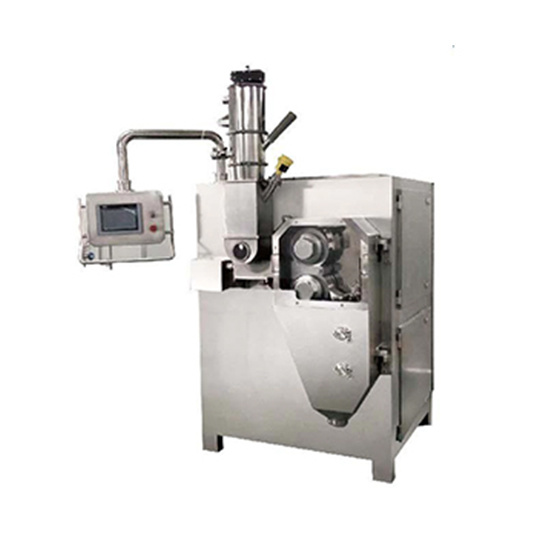
Dry granulator machines operate on a straightforward principle involving compression and milling. The process begins with the feeding of powdered materials into the machine, where they are subjected to high pressure between two rollers. This pressure compacts the powder into a solid mass or "slug," which is then broken down into granules through a milling process.
3.1 Key Components of Dry Granulator Machines
The essential components of a dry granulator machine include:
- **Feeder**: Regulates the flow of powder into the compaction chamber.
- **Roller Compactor**: Compresses the powder into slugs.
- **Milling Unit**: Breaks the slugs into granules of desired size.
- **Control Panel**: Allows operators to adjust parameters such as speed and pressure.
4. Benefits of Using Dry Granulator Machines
Investing in dry granulator machines offers several advantages that enhance manufacturing efficiency and product quality.
4.1 Enhanced Product Quality
Dry granulators produce granules that exhibit uniformity in size and shape, which is crucial for consistent product quality.
4.2 Cost-Effectiveness
The elimination of liquid binders and solvents reduces production costs and minimizes processing time.
4.3 Improved Flowability
The granulation process enhances the flow properties of powders, making them easier to handle and process.
4.4 Versatility
Dry granulators can handle a wide range of materials, including those that are sensitive to moisture.
5. Applications of Dry Granulator Machines in Various Industries
The versatility of dry granulator machines makes them suitable for several industries:
5.1 Pharmaceutical Industry
In the pharmaceutical sector, dry granulators are utilized to create granules for tablet formulations, ensuring accurate dosages and improved solubility.
5.2 Food Industry
Food manufacturers use dry granulation for products like powdered sugar and seasonings, where consistency and quality are paramount.
5.3 Chemical Industry
Dry granulators are employed to produce granules for various chemicals, ranging from fertilizers to industrial powders, enhancing the handling and application of these materials.
6. How to Choose the Right Dry Granulator for Your Needs
Selecting the appropriate dry granulator machine requires careful consideration of several factors:
6.1 Material Characteristics
Understanding the properties of the materials being processed is essential to determine the right machine specifications.
6.2 Production Volume
Consideration of the required production capacity will help identify a machine that meets demand without compromising efficiency.
6.3 Design and Configuration
Different machine designs may offer various advantages; selecting one that aligns with your operational needs is crucial.
7. Maintenance and Troubleshooting of Dry Granulator Machines
To maintain the performance and longevity of dry granulator machines, regular maintenance is essential.
7.1 Regular Cleaning
Periodic cleaning of the machine ensures that residue does not affect product quality or machine performance.
7.2 Lubrication of Moving Parts
Proper lubrication reduces friction and wear on components, enhancing machine efficiency.
7.3 Troubleshooting Common Issues
Understanding common issues like inconsistent granule size or machine jams can save time and improve productivity.
8. The Future of Dry Granulation Technology
The future of dry granulation technology looks promising, with advancements aimed at improving efficiency, automation, and precision. Innovations in materials science may lead to the development of new binding agents that enhance the granulation process while maintaining the benefits of a dry approach.
9. FAQs About Dry Granulator Machines
9.1 What materials can be processed with a dry granulator machine?
Dry granulator machines can process a variety of materials, including powders used in pharmaceuticals, food, and chemicals.
9.2 How does dry granulation compare to wet granulation?
Dry granulation does not require liquids, making it more efficient and suitable for moisture-sensitive materials compared to wet granulation.
9.3 What are the common issues faced when using dry granulators?
Common issues include inconsistent granule size, machine jams, and inadequate feed rates, all of which can typically be addressed through proper maintenance.
9.4 Can dry granulators be automated?
Yes, many modern dry granulators can be integrated with automation systems to enhance production efficiency and reduce manual labor.
9.5 How often should dry granulator machines be maintained?
Maintenance frequency can vary based on usage, but regular checks are recommended to ensure optimal performance, typically every few weeks or as needed.
10. Conclusion
Understanding the mechanics and functionality of dry granulator machines is crucial for industries reliant on precise granulation processes. These machines not only enhance product quality and efficiency but also provide flexibility across various applications. As technology evolves, the importance of dry granulation in manufacturing will only grow, making it essential for businesses to stay informed about advancements and best practices in the field. By investing in the right equipment and maintenance strategies, companies can ensure they remain competitive in an ever-evolving industrial landscape.
More News
Get a Quote

Add:
No. 9, Yungu Road, Zhutang Town, Jiangyin City, Jiangsu Province, China
E-mail: pxjx@jypxjx.com
Copyright © 2022 Jiangyin Peixin Machinery Technology Co., Ltd.


