

NEWS
Maximizing Production: The Role of Disc Pulverizers in Industrial Applications
Apr 15,2026
Maximizing Production: The Role of Disc Pulverizers in Industrial Applications
Table of Contents
1. Understanding Disc Pulverizers
2. How Disc Pulverizers Work
3. Key Advantages of Using Disc Pulverizers
4. Common Applications of Disc Pulverizers
5. Optimal Materials for Disc Pulverization
6. Maintenance Tips for Disc Pulverizers
7. Innovations in Disc Pulverizer Technology
8. Conclusion
9. FAQs
1. Understanding Disc Pulverizers
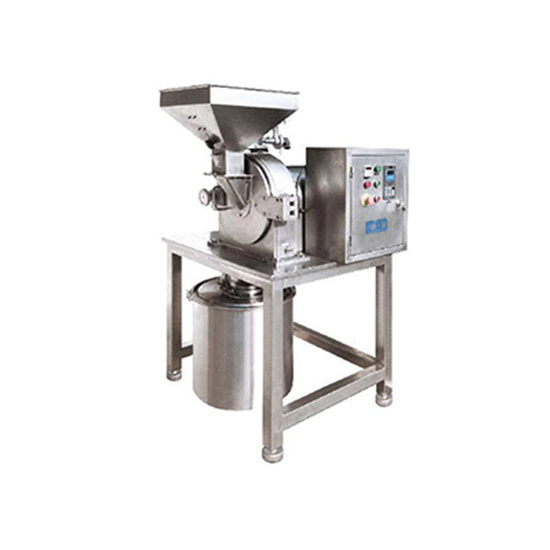
Disc pulverizers are powerful industrial machines designed to crush and grind various materials into fine powders. These machines play a pivotal role in many industries, including the food, pharmaceutical, and chemical sectors. With their ability to achieve precise particle size reduction, disc pulverizers significantly enhance production efficiency and product quality.
2. How Disc Pulverizers Work
The operation of a disc pulverizer is straightforward yet highly effective. At its core, the machine consists of two rotating discs, one fixed and the other moving. As raw material is fed into the pulverizer, it gets trapped between these discs. The rotating action generates intense friction and pressure, allowing the material to be ground into fine particles.
The **adjustable gap** between the discs is a critical factor that determines the particle size. By modifying this gap, operators can achieve the desired fineness, which is crucial for meeting specific industry standards.
3. Key Advantages of Using Disc Pulverizers
Disc pulverizers offer a multitude of advantages that enhance production processes:
3.1 High Efficiency
These machines operate at high speeds, allowing for rapid processing of materials. This efficiency translates into higher throughput and reduced operational costs.
3.2 Versatility
Disc pulverizers can handle a wide variety of materials, from hard minerals to soft organic substances. This versatility makes them suitable for numerous applications across different industries.
3.3 Consistent Particle Size
The precision engineering of disc pulverizers ensures uniform particle size distribution. Consistency is critical in many industries, as it directly impacts product quality and performance.
3.4 Low Maintenance Requirements
With minimal moving parts and robust construction, disc pulverizers tend to require less maintenance compared to other grinding machines. This reliability contributes to lower downtime and maintenance costs.
4. Common Applications of Disc Pulverizers
Disc pulverizers are utilized in various industrial applications, including:
4.1 Food Processing
In the food industry, disc pulverizers are used to grind spices, grains, and other materials. Their ability to produce fine powders without compromising flavor or quality makes them invaluable in food production.
4.2 Chemical Manufacturing
In the chemical sector, these machines pulverize raw materials into fine powders that are essential for creating various products, from plastics to pharmaceuticals.
4.4 Mining and Minerals
Disc pulverizers are crucial in the mining industry, where they reduce minerals and ores to a manageable size for further processing.
5. Optimal Materials for Disc Pulverization
Understanding the nature of materials that can be effectively processed by disc pulverizers is important for maximizing their benefits. Here are some common materials:
5.1 Hard Minerals
Disc pulverizers excel in grinding hard minerals like quartz, feldspar, and talc. Their robust design allows them to handle the toughness of these materials without significant wear.
5.2 Organic Materials
Soft organic materials such as herbs and spices can also be processed using disc pulverizers. The controlled grinding process preserves the integrity of the material while achieving the desired fineness.
5.3 Plastics and Polymers
In recycling applications, disc pulverizers are used to grind plastic waste into fine powders, facilitating easier processing and reuse.
6. Maintenance Tips for Disc Pulverizers
To ensure longevity and optimal performance of disc pulverizers, regular maintenance is essential. Here are some best practices:
6.1 Regular Inspections
Conduct routine inspections to identify any signs of wear and tear. Attention to components like bearings and discs can prevent major breakdowns.
6.2 Cleansing Procedures
Maintain cleanliness to prevent contamination of materials. Regularly clean the machine and surrounding areas to uphold hygiene standards.
6.3 Lubrication
Ensure that all moving parts are properly lubricated to minimize friction and wear. Regular lubrication schedules should be part of maintenance protocols.
7. Innovations in Disc Pulverizer Technology
Recent advancements in technology have improved the efficiency and effectiveness of disc pulverizers. Innovations such as digital control systems allow operators to monitor performance in real-time, adjusting parameters to optimize production.
7.1 Automated Settings
Modern disc pulverizers often feature automated settings that allow for precise control over particle size and production speed. This technology enhances operational efficiency and reduces the likelihood of human error.
7.2 Energy Efficiency
Newer models are designed with energy efficiency in mind, utilizing advanced motors and energy-saving technologies to reduce operational costs.
8. Conclusion
Disc pulverizers play a crucial role in maximizing production across various industrial applications. Their ability to efficiently process a wide range of materials while ensuring consistent particle size makes them indispensable in sectors such as food processing, chemical manufacturing, and mining. By understanding their functionalities, advantages, and best practices, organizations can leverage disc pulverizers to enhance productivity and improve the quality of their products.
9. FAQs
1. What types of materials can be processed with disc pulverizers?
Disc pulverizers can process a variety of materials, including hard minerals, organic substances, and plastics.
2. How do I choose the right disc pulverizer for my application?
Consider factors such as the type of material, desired particle size, and production capacity when selecting a disc pulverizer.
3. What maintenance is required for disc pulverizers?
Regular inspections, cleaning, and lubrication are essential for maintaining the performance of disc pulverizers.
4. Are there any safety concerns with using disc pulverizers?
Yes, operators should follow safety protocols, including wearing appropriate protective gear and ensuring proper machine operation.
5. How do disc pulverizers compare to other grinding machines?
Disc pulverizers offer higher efficiency, versatility, and consistent particle size compared to many other grinding machines, making them a favorable choice in various industries.
More News
Get a Quote

Add:
No. 9, Yungu Road, Zhutang Town, Jiangyin City, Jiangsu Province, China
E-mail: pxjx@jypxjx.com
Copyright © 2022 Jiangyin Peixin Machinery Technology Co., Ltd.


